Office Interior Design: The Complete Guide to Creating a Productive & Modern Workspace

Discover how professional office interior design improves productivity, employee satisfaction, and brand image.
Office interior design is no longer just about desks and chairs. Today, workspaces are strategic tools that impact productivity, creativity, and company culture. A well-designed office improves employee performance, attracts talent, and strengthens brand identity.
Whether you are designing a corporate headquarters, startup office, or coworking space, smart design decisions create long-term business value.
Why Office Interior Design Matters
1. Boosts Productivity
Proper lighting, ergonomic furniture, and efficient layouts reduce fatigue and increase focus.
2. Improves Employee Well-being
Natural light, plants, and comfortable spaces reduce stress and improve mental health.
3. Strengthens Company Image
Clients judge your brand from your office environment.
4. Encourages Collaboration
Smart zoning promotes teamwork without disturbing focus.
5. Attracts Top Talent
Modern offices help recruit and retain employees.
Key Elements of a Successful Office Design
1. Space Planning
Proper layout is the foundation.
Balance between:
- Open spaces
- Private offices
- Meeting rooms
- Break areas
2. Ergonomic Furniture
Invest in:
- Adjustable chairs
- Sit-stand desks
- Proper monitor height
This reduces back pain and health issues.
3. Lighting Strategy
Combine:
- Natural daylight
- Task lighting
- Ambient lighting
Avoid harsh shadows.
4. Acoustic Comfort
Use:
- Acoustic panels
- Carpets
- Fabric partitions
This controls noise.
5. Brand Identity
Integrate:
- Logo walls
- Brand colors
- Custom graphics
Your office should reflect your company culture.
Modern Office Design Styles
Minimalist Office
Clean lines, neutral colors, and simple furniture.
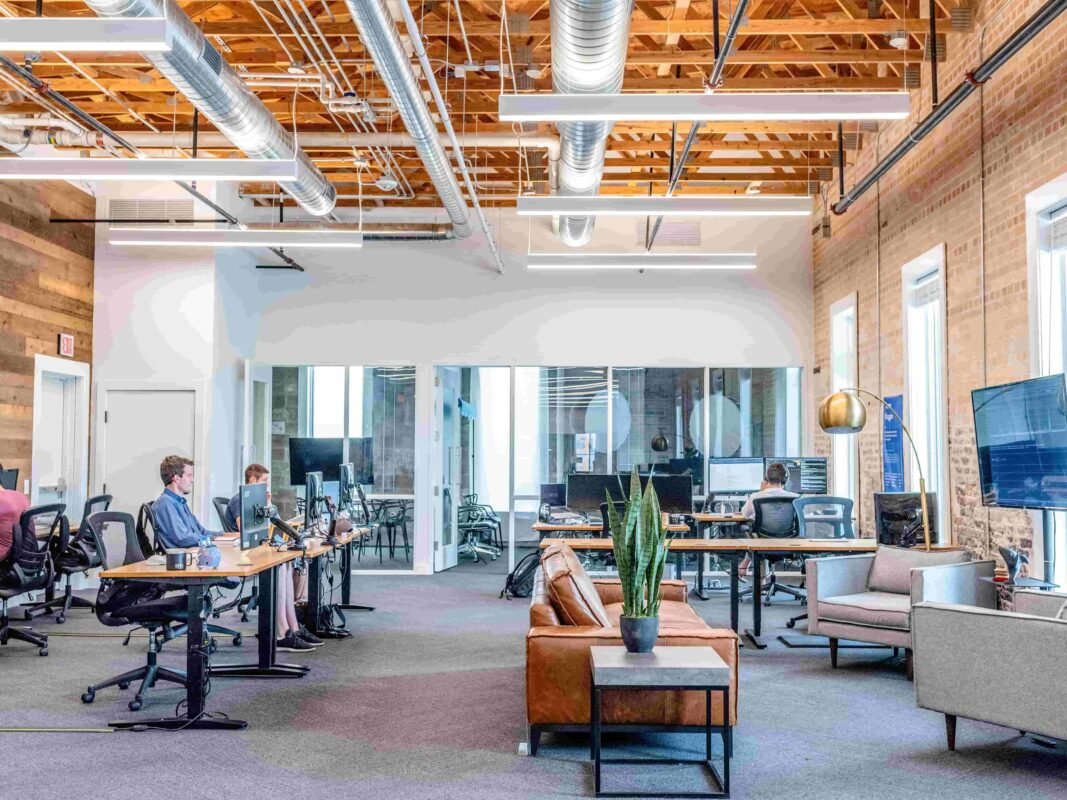
Industrial Office
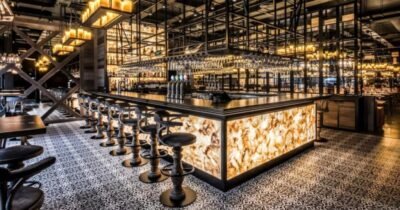
Exposed ceilings, concrete floors, metal accents.
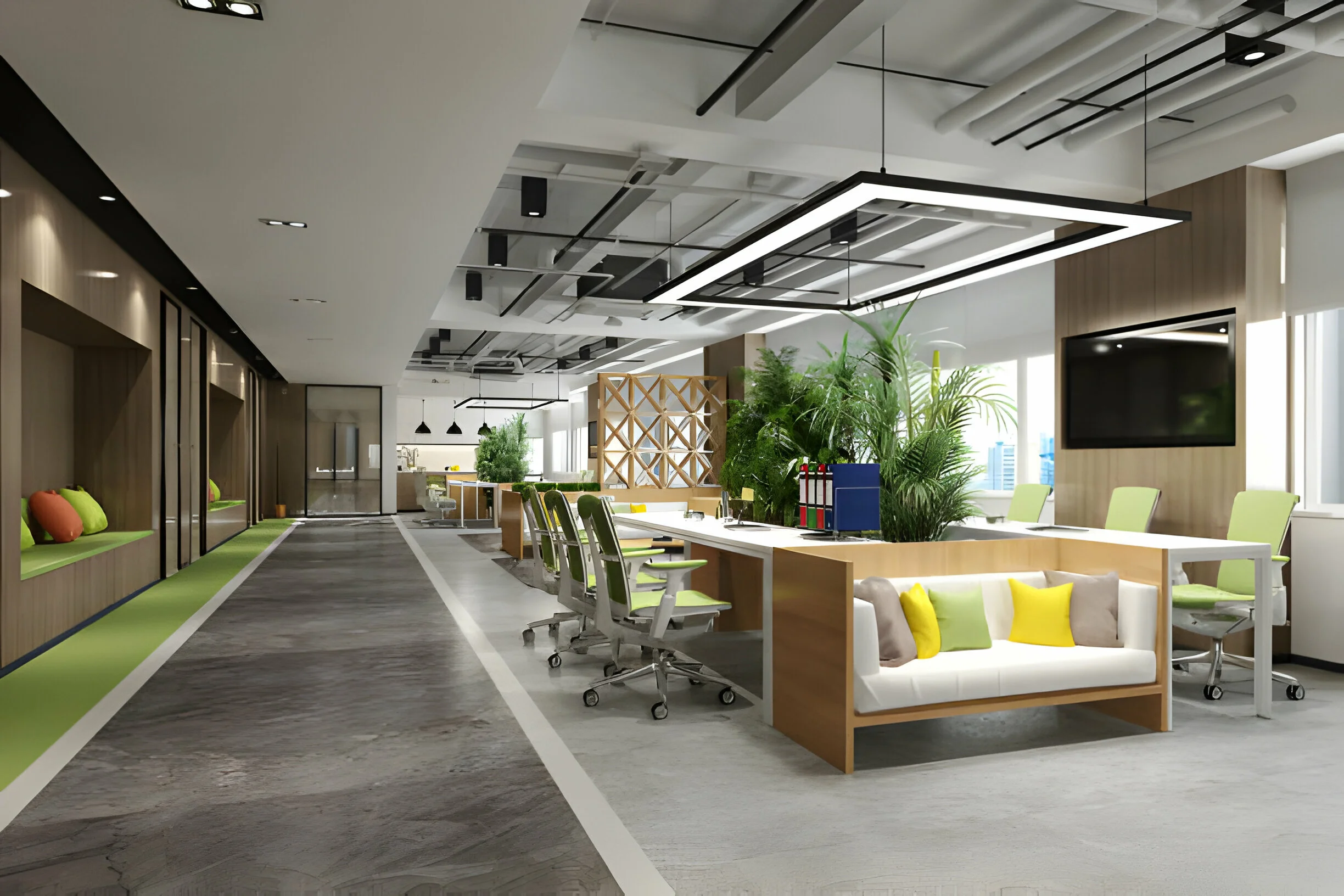
Biophilic Office
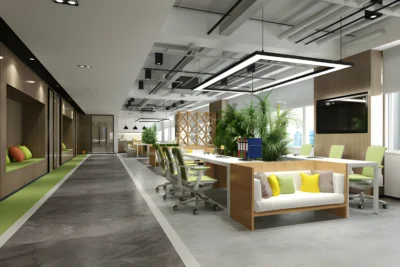
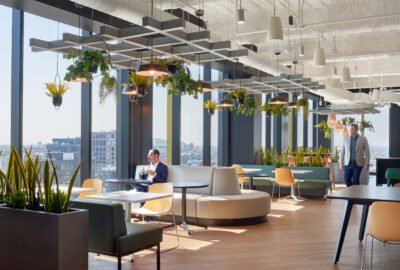
Plants, natural light, wooden textures.
Corporate Luxury
Marble, glass partitions, premium lighting.
Creative Studio
Bold colors, flexible furniture, writable walls.
Office Zones Explained
Workstations
Open desk areas for teams.
Private Offices
For management and confidential meetings.
Meeting Rooms
Equipped with:
- Screens
- Video conferencing
- Acoustic treatment
Breakout Areas
Casual seating for relaxation.
Pantry & Coffee Corners
Boost team morale.
Office Color Psychology
- Blue: Focus and calm
- Green: Balance and freshness
- Yellow: Creativity
- Gray: Professional tone
- White: Clean and modern
Use colors strategically.
Technology Integration
Smart offices use:
- Wireless charging
- Smart lighting
- Access control
- Video conferencing systems
Sustainable Office Design
Eco-friendly choices:
- LED lighting
- Recycled furniture
- Low VOC paints
- Energy-efficient systems
Common Office Design Mistakes
❌ Too many open desks
❌ Poor lighting
❌ No storage
❌ Ignoring acoustics
❌ No collaboration areas
Office Interior Design Process
Step 1: Needs Assessment
Understand:
- Team size
- Workflow
- Growth plans
Step 2: Concept Design
Mood boards, layouts, material selection.
Step 3: 3D Visualization
Realistic previews before construction.
Step 4: Technical Drawings
Execution-ready plans.
Step 5: Execution Support
On-site guidance.
Budget Planning
Office cost depends on:
- Size
- Material quality
- Furniture
- Technology
Professional design saves money long-term.
Future Office Trends
✔ Hybrid work spaces
✔ Phone booths
✔ Wellness rooms
✔ Smart desks
✔ Modular furniture
Conclusion
Office design is a strategic investment.
A professional workspace improves productivity, employee happiness, and brand reputation.
Call to Action
Looking to design your office?
Memaar Architecture delivers:
✔ Professional layouts
✔ 3D visualization
✔ Technical drawings
✔ Turnkey solutions
Contact us today.